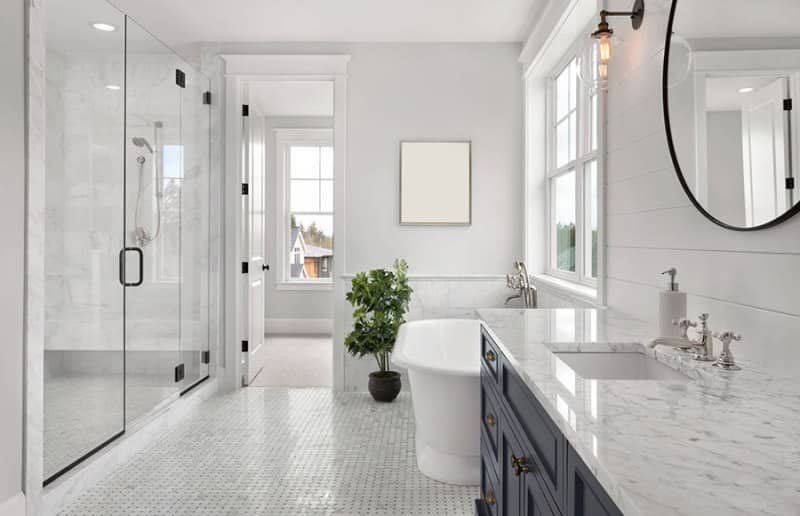


Restoring a lavatory in an old house usually involves additional concerns and complications. There may be problems in terms of plumbing or electricity hidden under the old tiled floor or stylish plumbing fixtures. Very often, old layouts do not conform to modern standards.
A bathroom renovation in an old building requires thorough preparation and skillful hands as well as artistic taste. A lot of construction problems are hidden, like plumbing or uneven floors, that contribute to the overall expense of renovation. To make a modern bathroom, modern bathroom renovation design ideas can help.
If you do not plan in advance, all the unexpected expenses will come upon you in an unforeseen manner. This checklist will help you organize a bathroom renovation in an old house. This blog will offer you some useful bathroom renovation tips for older homes.
Older properties need specialized trade knowledge. Modern fixtures require
that old builds lack.
Bathroom renovation services focus on foundational upgrades before applying surface finishes. Key restoration solutions include:
Find the detailed breakdown of the bathroom renovation.
Demolition in older properties requires care. Plaster and lath walls crumble easily. Mortar beds under old tile floors can be several inches thick. Once wall linings come down, check floor joists around the toilet. Also check the shower base for water damage. Address sagging timber. Do not add new subfloors beforehand. Trying to tile over an unlevel subfloor leads to cracked grout lines.
Galvanized steel pipes corrode from the inside out over thirty years. This restricts water pressure and causes rust stains in sinks. Replace old supply lines with modern PEX or copper lines. Have a licensed electrician replace old cloth-insulated wiring with grounded circuits. Install dedicated RCD safety switches for all power outlets and light fixtures.
Old homes move as weather changes. Flexible cement-board underlayment and high-grade waterproofing membranes are critical.
Apply liquid-applied or sheet waterproofing membranes across shower walls and floor spaces. Extend the waterproofing membrane at least 150mm up surrounding walls. This will form a watertight tray.
Most structural failures in vintage bathrooms start with moisture migration through unsealed grout. Understanding this prevents costly structural repairs:
[ Cracked Grout Joints ] ➔ [ Subfloor Moisture Absorption ] ➔ [ Joist Deflection & Sagging ] ➔ [ Tile Delamination ]
A bathroom renovation is the perfect opportunity to lower your home’s running costs. Replacing older fixtures with water-efficient products can reduce household water use without affecting performance. Modern LED lighting also uses much less electricity than older light fittings.
According to the Australian Government’s Water Efficiency Labelling and Standards (WELS) Scheme, showers account for around 24% of household water use. Installing a high-rated WELS showerhead can significantly reduce water consumption while maintaining good pressure.
Likewise, LED lighting uses up to 80% less electricity than traditional incandescent bulbs and lasts much longer, making it a smart investment during renovations.
Bathroom renovation services follow some steps. Follow this sequence to keep your project organized and within budget:
| Symptom | Hidden Cause | Professional Solution |
| Low shower pressure | Corroded galvanized steel water supply pipes. | Re-pipe supply lines with 20mm PEX tubing up to the shower mixer. |
| Spongy floor around toilet | Long-term slow leak at the wax ring flange. | Cut back rotted subfloor, sister timber joists, and fit a PVC flange. |
| Cold, drafty bathroom space | Uninsulated exterior walls and single-pane windows. | Add foil-backed insulation batts and install double-glazed frosted glass. |
| Persistent mold on ceiling | Undersized exhaust fan or lack of exterior ducting. | Install a multi-speed inline fan ducted directly through the roof ridge. |
Small footprints require smart spatial choices. Use these small bathroom renovation tips for older homes to expand visual space:
Explore these practical links to plan your project successfully:
The resolution of some of the most frequent problems, like low water pressure, mold, and drafts, through effective remedies contributes to greater comfort and safety. Replacing rusty pipes can solve the problem of insufficient pressure, while exhaust fans will eliminate mold in the room. Insulation and double-glazed windows will provide thermal insulation of the room.
When carrying out the renovation, it is important to take into account the issues concerning safety and environmental protection. The presence of lead paint and asbestos in old buildings should be dealt with by professionals before the demolition starts. It is also wise to set aside a portion of money for unexpected repairs; at least 15-20% of the total costs would be enough for dealing with unpleasant surprises in the future. There are plenty of creative solutions for space-saving design of old bathrooms.
Updating an older home requires expert care. It also needs knowledge and clear planning. By identifying structural and plumbing needs before choosing finishes, you ensure a beautiful space that lasts for decades. Follow bathroom renovation tips for older homes to get the best results.
Reach out to the experienced team of Just Bathroom and Kitchen today for specialized bathroom renovation advice tailored to your property.
Bathroom renovation services should be availed carefully. Using trusted information from the Housing Industry Association (HIA) can help you follow Australian building standards and safety rules. It also helps you make better decisions. Working with experienced builders, plumbers, electricians, and bathroom renovation specialists ensures that every stage of the project is completed safely. Bathroom renovation tips for older homes can be very useful.
Modern bathroom renovation design ideas are already discussed. Overall, renovating an older bathroom takes careful planning and the right skills. The goal is to keep the home’s original character while adding modern comfort, safety, and functionality. By planning ahead, you can create a bathroom that looks great, works well, and adds long-term value to your home.
FAQS
Immediately halt work if asbestos beneath the vinyl floor backing or lead paint on old trims is suspected. Bring in certified professionals to conduct tests and have materials removed prior to demolishing the rest of the bathroom.
A well-maintained cast iron bathtub is worth re-glazing rather than replacing with a new one since it will cost considerably less than purchasing and installing a new lightweight acrylic bathtub.
Keep a contingency fund of 15-20% solely dedicated to renovation of older houses to cover all potential issues such as joist repairs, old pipes or non-compliant electrical wiring discovery.
Absolutely, but it might require floor joist work. The joists are notched or cut in a special way to lower floor levels by means of using a special shower tray.
Absolutely, but it might require floor joist work. The joists are notched or cut in a special way to lower floor levels by means of using a special shower tray.
Our company has been active in Melbourne and Sydney for years, however, our contractors' years of experience are generally between 8 to 15 years. We are a registered renovation company beautifying spaces like never before! Our home renovations Bondi are known for meeting perfection.