
Living near the coast offers beautiful surroundings, but it also creates specific challenges for residential properties. Salt-laden air, humidity, strong sunlight and changing weather conditions can gradually affect building materials, fixtures and finishes. When planning home renovations Cronulla, choosing materials that can handle these conditions is essential for maintaining a comfortable, functional and attractive home. From kitchen cabinetry and bathroom fittings to flooring and outdoor finishes, the right selections can help reduce maintenance requirements and support long-term durability.
Coastal homes experience environmental conditions that can influence how building materials perform over time. In areas such as Cronulla, properties may be exposed to airborne salt, moisture, strong sunlight and seasonal weather changes. These conditions can affect metal components, painted surfaces, timber, flooring and other commonly used renovation materials.
Salt deposits can accelerate corrosion on unsuitable metal fittings, particularly when surfaces remain damp or are not maintained. Excess moisture can contribute to swelling in some timber products, deterioration of finishes and problems with poorly ventilated spaces. Direct sunlight can also cause certain materials and colours to fade over time.
This does not mean coastal homeowners need to avoid natural materials or attractive decorative finishes. Instead, material selection should consider the property’s exposure, intended use and maintenance requirements. A bathroom near the coast, for example, needs different material considerations from a sheltered living room.
Before selecting materials, consider the environmental conditions affecting your property.
Understanding these factors helps homeowners make informed decisions rather than choosing materials based entirely on appearance.
Selecting Materials That Suit Coastal Conditions involves balancing appearance, performance, maintenance and suitability for each room. Not every material performs equally well in exposed environments, and a product suitable for a dry internal space may not be appropriate for a bathroom or outdoor area.
A useful starting point is to separate materials according to their intended application. Flooring needs to handle foot traffic and cleaning, cabinetry must tolerate everyday use and occasional moisture, while bathroom surfaces require appropriate water resistance and installation detailing.
Flooring is one of the most noticeable parts of a home renovation, but its appearance should not be the only consideration. Coastal homes benefit from flooring that suits the room’s moisture exposure, cleaning requirements and everyday traffic.
Porcelain tiles are a practical option for many kitchens, bathrooms and entry areas because they have low water absorption and are available in different finishes. They can also imitate natural stone or timber, allowing homeowners to achieve a particular design without necessarily using those materials.
Quality vinyl flooring may also be suitable for selected internal applications, provided the product is specified for the intended environment and installed according to manufacturer instructions. However, moisture resistance at the surface does not automatically protect an unsuitable subfloor from water damage.
When comparing flooring, consider:
The best flooring choice is one that performs reliably in its intended location rather than simply matching the interior colour scheme.
Timber can introduce warmth and natural character into coastal interiors. It works particularly well in kitchens, living areas, feature walls and selected furniture applications. However, timber responds to changes in moisture and temperature, so its suitability depends on the species, construction, protective finish and installation environment.
Engineered timber products can provide greater dimensional stability than some solid timber options, although their performance still depends on product quality and moisture conditions. For areas with regular water exposure, an appropriate tile or another moisture-suitable flooring option may be more practical.
Timber-look porcelain tiles are another option for homeowners who prefer a natural appearance but want a surface suitable for certain wet-area applications. They can create visual continuity between different rooms while offering the practical characteristics of ceramic or porcelain flooring.
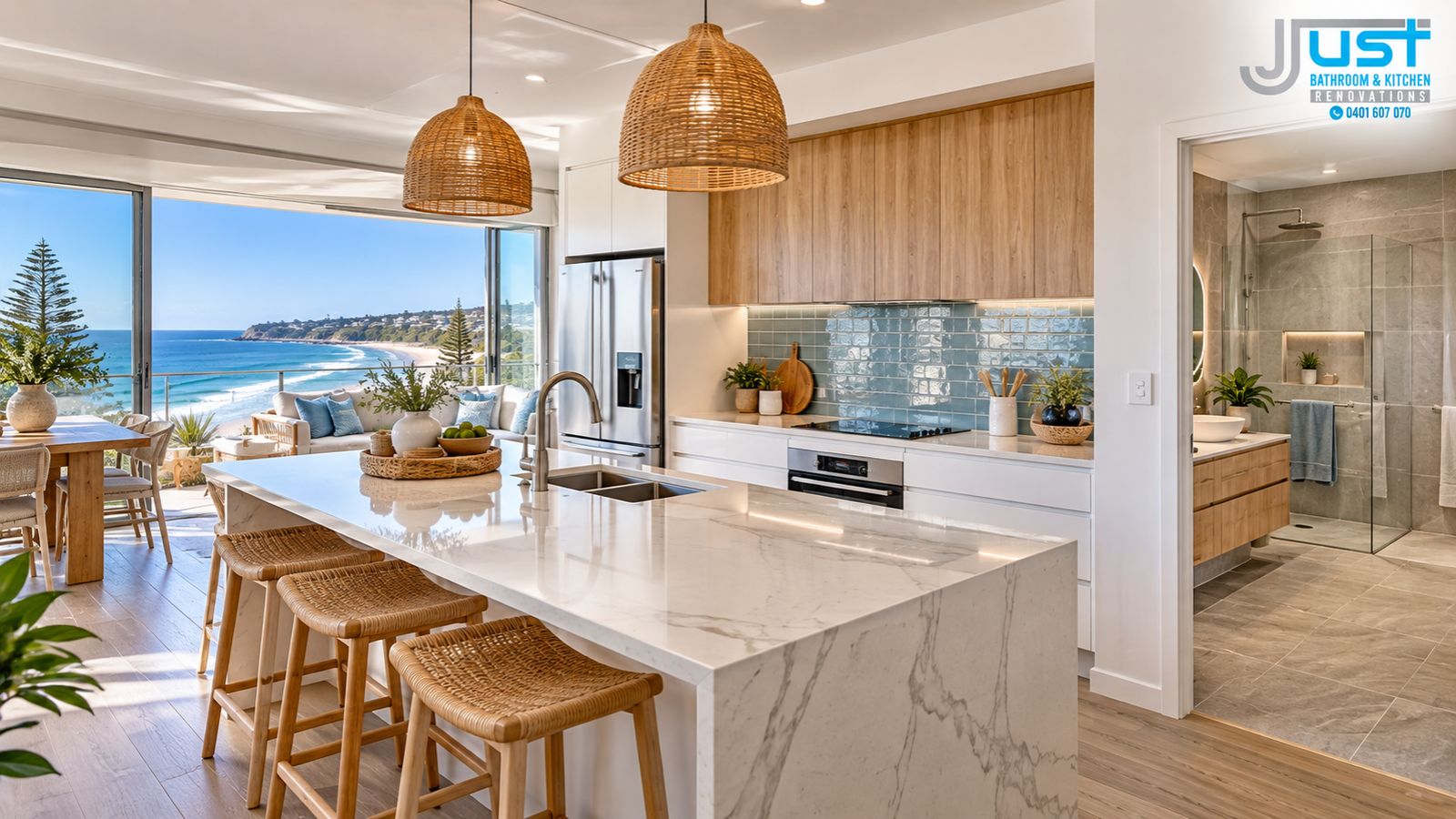
Kitchens experience frequent use, cooking residue, cleaning products, spills and changes in temperature. In coastal properties, these everyday demands are combined with environmental moisture and potential salt exposure. Selecting suitable cabinetry, benchtops, splashbacks and hardware can help maintain the kitchen’s appearance and functionality.
Cabinetry materials should be selected according to their construction, finish and exposure to moisture. Moisture-resistant board products with suitable edge sealing and protective finishes can be appropriate for many kitchen applications. However, no cabinet material should be considered completely waterproof unless its specifications explicitly support that claim.
Pay particular attention to areas near sinks, dishwashers and plumbing connections. Poorly sealed edges or damaged cabinet finishes can allow water to enter the substrate, potentially causing swelling and deterioration.
A practical kitchen design should also include adequate clearance around appliances, accessible storage and suitable ventilation. These considerations make the kitchen easier to use and help protect its components during everyday activities.
Benchtops need to withstand regular food preparation, cleaning and accidental spills. Popular options include natural stone, porcelain surfaces and other engineered materials, each with different performance characteristics.
Natural stone can provide a distinctive appearance, but its porosity and maintenance requirements vary depending on the stone type. Some varieties require periodic sealing to reduce staining and moisture absorption.
Porcelain benchtops can offer low porosity and good resistance to everyday staining when correctly specified and installed. However, edges and unsupported sections still require appropriate detailing because impact damage can occur.
When comparing benchtop options, consider:
The right selection should complement the kitchen design while matching the household’s cooking habits and maintenance preferences.
Kitchen splashbacks protect walls from cooking splashes, grease and everyday cleaning. Porcelain tiles, ceramic tiles and suitable glass surfaces are common options.
Large-format tiles can reduce the number of grout joints, creating a cleaner appearance and potentially making routine cleaning easier. However, grout selection and installation quality remain important, particularly around sinks and benchtops.
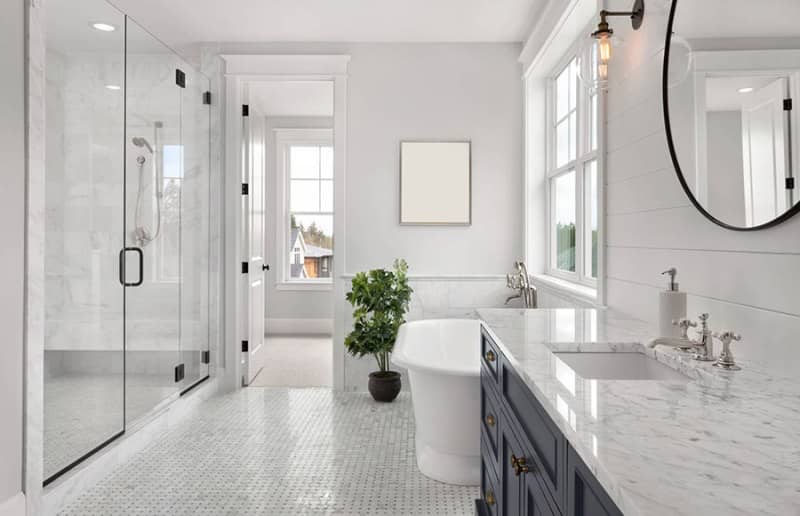
Bathrooms require careful material selection because they experience repeated water exposure, steam, humidity and frequent cleaning. In coastal homes, these conditions make appropriate waterproofing, ventilation and surface detailing particularly important.
Porcelain and ceramic tiles are widely used in bathrooms because they are available in many colours, textures and sizes. Porcelain generally has lower water absorption than standard ceramic tile, although both can be suitable when selected and installed appropriately.
Floor tiles should provide suitable slip resistance for their intended wet-area application. A highly polished surface may look attractive but can become slippery when wet, so homeowners should consider the actual use of the area before selecting a finish.
Natural stone can also be used in bathroom designs, but its suitability depends on the stone’s characteristics and required maintenance. Some varieties are more porous and may need sealing and specific cleaning products.
Metal fittings can be affected by salt exposure, particularly in coastal properties where bathroom windows or external doors allow salty air to enter.
When choosing taps, shower fittings, handles and accessories, check the material composition and manufacturer’s suitability recommendations. Stainless steel grades and protective coatings vary in their corrosion resistance, so the general label alone should not be treated as a guarantee of performance.
Suitable fixture selection should also consider:
Regular cleaning and drying can also help reduce salt deposits and surface deterioration.
Waterproofing is essential in bathrooms, but it should not be treated as a substitute for ventilation. Even a properly waterproofed bathroom can develop condensation and mould concerns if moisture is allowed to accumulate.
Mechanical exhaust ventilation, suitable window openings and effective air circulation help remove humid air after showers and baths. Waterproofing systems should be selected and installed by appropriately qualified professionals in accordance with applicable requirements.
Particular attention should be given to shower corners, floor-to-wall junctions, penetrations and transitions around fixtures. These areas require careful preparation and installation because small detailing mistakes can lead to water-related damage.
Planning complete home renovations Cronulla projects requires more than selecting individual materials for each room. Flooring, cabinetry, fixtures, wall finishes and lighting should work together to create a consistent interior while responding to the property’s coastal environment.
For example, a homeowner renovating an older coastal property might choose durable porcelain flooring for the kitchen and bathroom, moisture-suitable cabinetry, corrosion-conscious hardware and natural timber accents in living spaces. This combination can create a warm coastal appearance without relying on materials that may be unsuitable for certain wet or exposed areas.
A consistent design does not mean every room must use identical materials. Instead, select a coordinated palette of colours, textures and finishes.
Neutral flooring can provide a foundation for different interior styles, while natural textures and carefully selected fittings introduce visual interest. Using a limited range of complementary finishes can also help smaller homes feel more connected.
Before finalising selections, consider how each material will look beside the others. A benchtop, cabinet finish and splashback should complement one another rather than compete visually.
Every property has different dimensions, layouts and renovation priorities. Custom home renovations Cronulla projects allow homeowners to address specific requirements rather than relying on standard layouts that may not suit the building.
For example, a narrow kitchen may benefit from carefully planned storage and lighter finishes, while a bathroom with limited natural light may require reflective surfaces and a suitable lighting arrangement.
Customisation should also account for practical issues such as existing plumbing locations, ventilation pathways, wall construction and available floor space. Understanding these constraints early can help prevent unnecessary design changes during construction.
Outdoor areas in coastal homes often experience more direct exposure to salt, sunlight, wind and rain than internal spaces. Decking, external tiles, railings, doors and outdoor fixtures should therefore be selected according to their exposure and maintenance requirements.
Outdoor decking materials include treated timber, selected hardwoods and composite products. Each option has different characteristics.
Timber can provide a natural finish, but it generally requires ongoing cleaning and protective maintenance. The suitability of a timber species depends on its durability, exposure conditions and installation details.
Composite decking may offer a lower-maintenance alternative in some applications, but product quality, heat absorption, drainage and manufacturer specifications should be considered before selection.
Outdoor gates, railings, fasteners and exposed fixtures can experience significant salt exposure. Choosing appropriate corrosion-resistant materials and compatible fixings is important for maintaining their condition.
Stainless steel components may be suitable for some applications, but the appropriate grade should be selected according to exposure conditions. Protective coatings can also provide additional protection when correctly specified and maintained.
Avoid combining incompatible metals without considering galvanic corrosion. Where different metals come into contact in the presence of moisture, corrosion can occur under certain conditions. Professional material selection and suitable isolation details help manage this risk.
Material quality is only one part of a successful renovation. Correct preparation, installation and finishing techniques are equally important. Even a premium tile or benchtop can perform poorly if the substrate is unsuitable or installation requirements are ignored.
When comparing professional home renovators Cronulla, homeowners should look beyond appearance and consider the way a renovation project is planned and managed.
Ask potential renovation professionals about:
A reliable renovation process should include clear discussions about the existing property, proposed materials, project scope and responsibilities.
Correct installation helps materials perform according to their intended specifications. For example, tiles require suitable substrate preparation, appropriate adhesives and correctly designed movement joints. Cabinetry requires accurate measurements and suitable protection around moisture-prone areas.
Likewise, bathroom waterproofing requires more than applying a coating to visible surfaces. Preparation, junction detailing, penetrations and system compatibility all influence performance.
Homeowners should ensure that relevant specialist work is carried out by appropriately qualified tradespeople and that applicable building and Australian Standards requirements are considered.
Some renovation problems arise because materials are selected based on appearance without considering their actual performance requirements. Avoiding a few common mistakes can make a significant difference to the finished result.
A decorative metal fitting may look suitable in a showroom but may not be designed for a coastal environment. Before purchasing exposed hardware, check its material composition, finish and corrosion-resistance specifications.
Water-resistant flooring, cabinetry and coatings are not automatically suitable for continuous water exposure. Homeowners should understand the difference between resistance to occasional moisture and suitability for wet-area installation.
New tiles and fittings will not solve persistent condensation problems if the bathroom has inadequate ventilation. Consider airflow and moisture removal as part of the overall renovation design.
Highly polished surfaces, delicate finishes and complex grout arrangements may require more cleaning than homeowners expect. Think about everyday use and ongoing maintenance before making a final decision.
A successful coastal renovation begins with understanding the existing property rather than immediately selecting new finishes. Older homes may have hidden moisture concerns, deteriorated substrates, outdated plumbing or ventilation limitations that need to be assessed before new materials are installed.
The following practical considerations can help homeowners make better decisions:
One useful example is a bathroom renovation where the homeowner wants a natural stone appearance. Rather than selecting a product based only on its colour, the renovation team should assess its porosity, slip characteristics, cleaning requirements and compatibility with the proposed installation system. This approach helps ensure that the finished bathroom is practical as well as attractive.
Every coastal home has its own requirements, from the level of salt exposure to the existing kitchen and bathroom layout. A suitable renovation approach should consider these conditions before selecting cabinetry, benchtops, tiles, fixtures and other finishes. The goal is to create spaces that look cohesive while supporting everyday functionality and long-term maintenance.
Just Bathroom & Kitchen Renovation focuses on helping homeowners consider the practical and design aspects of their renovation projects. Material suitability, room functionality, finishing details and the relationship between different design elements all contribute to the final result. For coastal properties, these decisions are particularly important because moisture management and appropriate material selection should be considered alongside appearance.
Choosing Materials That Suit Coastal Conditions is about making informed decisions for the actual environment in which your home is located. Durable flooring, suitable cabinetry, carefully selected bathroom fittings, appropriate waterproofing and effective ventilation can all contribute to a more practical renovation. No single material is suitable for every application, so the best results come from considering each product’s specifications and intended use.
Just Bathroom & Kitchen Renovation can be considered when exploring renovation options for kitchens and bathrooms in coastal homes. Discussing your property’s requirements, preferred finishes and practical priorities can help establish a suitable renovation direction. With thoughtful planning and appropriate workmanship, homeowners can create attractive spaces that are better prepared for the demands of coastal living.
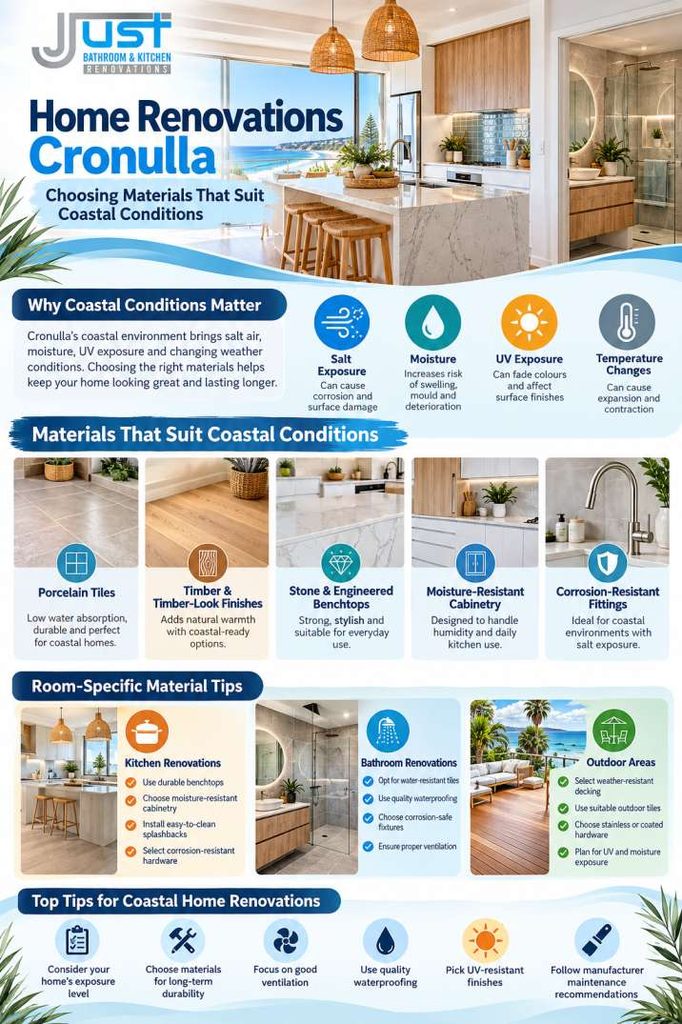
The most suitable materials depend on the room, exposure level and intended use. Porcelain tiles are often practical for kitchens, bathrooms and entry areas because of their low water absorption. Moisture-resistant cabinetry, suitable benchtop surfaces and corrosion-conscious metal fittings can also be useful. For outdoor applications, select decking, hardware and finishes according to their salt, moisture and UV exposure specifications.
Salt carried through coastal air can settle on metal surfaces and contribute to corrosion, particularly when moisture is present. Exposed fixtures, door hardware, railings and fasteners may be affected if their materials or protective finishes are unsuitable. Regular cleaning, appropriate material selection and following manufacturer maintenance recommendations can help manage salt deposits and maintain the condition of exposed components.
Both materials can be suitable, but they have different maintenance and performance characteristics. Porcelain generally has low water absorption and is available in finishes that imitate natural stone. Natural stone offers distinctive patterns and textures but may require sealing and more specialised cleaning. Homeowners should also consider slip resistance, installation requirements and the specific conditions of the bathroom before choosing either material.
Effective moisture management involves suitable waterproofing, proper ventilation, appropriate surface materials and correct installation detailing. Ensure that wet areas are prepared and waterproofed according to applicable requirements, and provide suitable mechanical or natural ventilation to remove humid air. Pay particular attention to shower junctions, plumbing penetrations and floor-to-wall transitions, as these areas require careful workmanship.
Begin by assessing the existing condition of the room, including plumbing, ventilation, flooring, cabinetry and any signs of moisture damage. Identify your functional requirements and preferred design before comparing materials. Check product specifications, cleaning requirements and suitability for coastal exposure. It is also important to understand the project scope, trade responsibilities and installation requirements before renovation work begins.
Our company has been active in Melbourne and Sydney for years, however, our contractors' years of experience are generally between 8 to 15 years. We are a registered renovation company beautifying spaces like never before! Our home renovations Bondi are known for meeting perfection.